
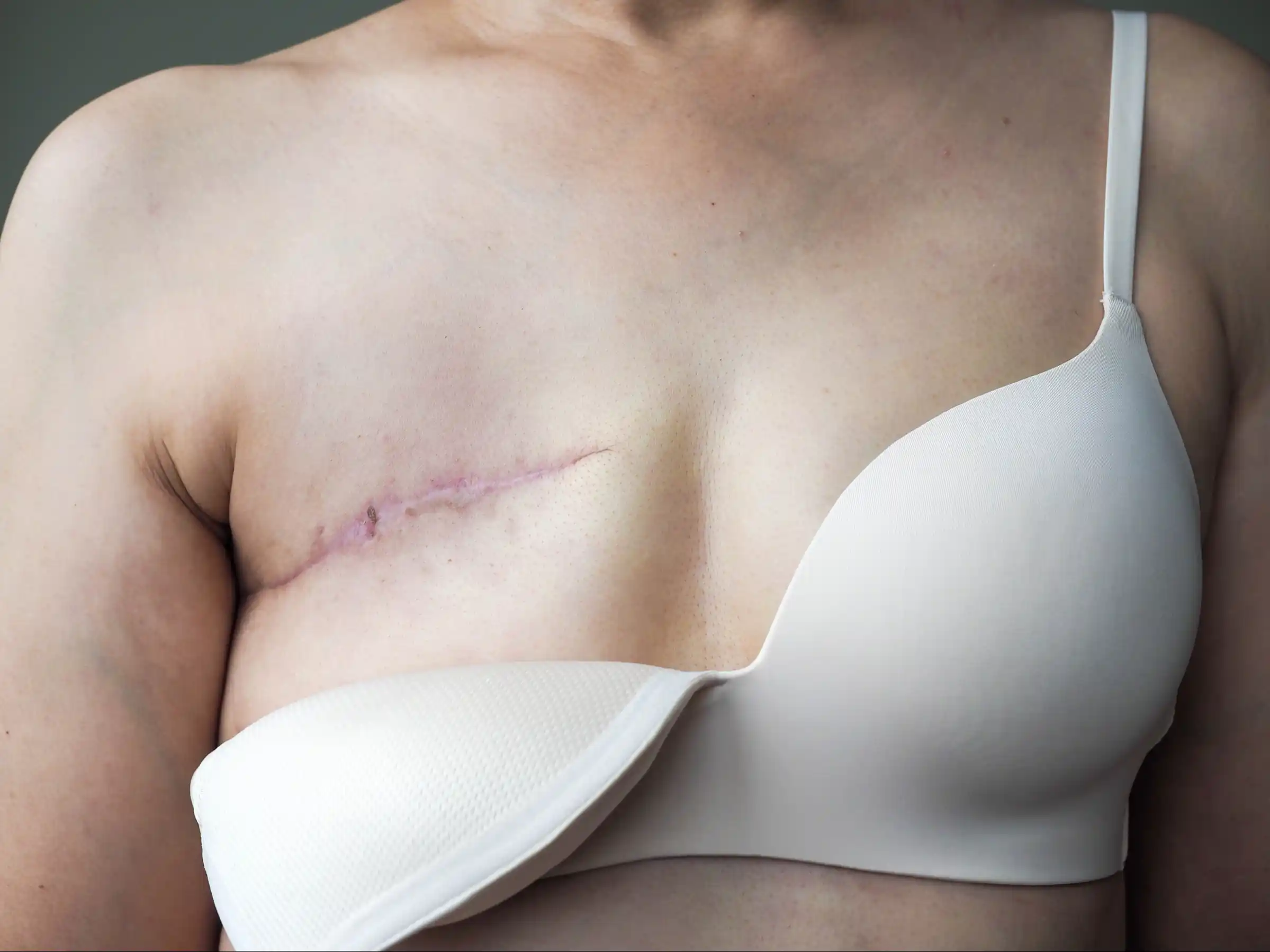
Key Takeaways
- There are three main types of breast reconstruction: implant-based, autologous (using your own tissue), and hybrid, which combines both.
- Flap procedures can use tissue from the belly, buttocks, thigh, or side of the chest, so many women have more than one option.
- The type of mastectomy you have, plus your body, health history, and cancer treatment plan, can shape which options fit you best.
- Reconstruction can start during your mastectomy (immediate) or after you heal and finish treatment (delayed).
- The Center for Microsurgical Breast Reconstruction is a trusted breast reconstruction surgery practice serving women in Florida, Mississippi, Louisiana, Georgia, New York, and South Carolina. Request a consultation online to explore your mastectomy reconstruction options.
The Three Main Types of Breast Reconstruction
Facing a mastectomy brings many decisions at once. Reconstruction is one of the biggest, and it helps to know the basics before you meet with a surgeon.
According to the National Cancer Institute's overview of breast reconstruction after mastectomy, breasts can be rebuilt with implants, with autologous tissue (tissue from elsewhere in your body), or with both.
| Implant-Based | Autologous (Flap) | Hybrid | |
|---|---|---|---|
| What's used? | Saline or silicone implant | Your own skin, fat, and blood vessels | Your own tissue plus an implant |
| Surgery length | Shorter | Longer | Varies |
| Initial recovery | Often shorter | Often longer | Varies |
| Look and feel | Silicone may feel more natural than saline | Often softer and more natural | Natural tissue with added volume |
| Long-term | Implants may need to be replaced over time | Tissue changes with your body | Depends on the plan |
| After radiation | May not be an option | Can replace radiation-damaged tissue | Discussed case by case |
Implant-Based Reconstruction
Implant-based reconstruction uses a saline or silicone implant to rebuild the breast shape. It's often done in two stages. First, a tissue expander (a temporary, adjustable implant) gently stretches the skin. Later, the expander is replaced with a permanent implant. In some cases, the implant is placed during the mastectomy itself.
Learn more about implant-based breast reconstruction at the Center for Microsurgical Breast Reconstruction.
Autologous (Flap) Reconstruction
Autologous reconstruction uses a 'flap,' which is a section of your own skin, fat, and blood vessels. In a free flap, the surgeon moves the tissue to the chest and reconnects its tiny blood vessels using microsurgery (surgery done under a microscope).
MedlinePlus explains natural tissue breast reconstruction this way: the rebuilt breast is often softer and more natural than an implant, and its size and shape can be closely matched to your other breast. The tradeoff is a longer surgery and a longer recovery at home.
Hybrid Reconstruction
Hybrid reconstruction combines your own tissue with an implant. It can be a good fit when you want a natural feel but don't have enough donor tissue for the size you want. Read more about hybrid breast reconstruction at the Center for Microsurgical Breast Reconstruction.
Types of Flap Reconstruction at the Center for Microsurgical Breast Reconstruction
Many women believe implants are their only choice. In a 2022 ASPS survey on breast reconstruction knowledge, 54% of women were unsure whether there are surgical options beyond implants. In fact, there are many. The Center for Microsurgical Breast Reconstruction offers these flap procedures:
| Flap | Full Name | Donor Area | Who It May Suit |
|---|---|---|---|
| DIEP | Deep inferior epigastric perforator | Lower belly | Many women with enough belly tissue; spares the abdominal muscle |
| APEX | Abdominal perforator exchange | Lower belly | Women seeking a muscle-sparing abdominal option |
| SIEA | 30–60 minutes | Lower belly | Women whose blood vessels in this area are a good fit |
| SGAP | Superior gluteal artery perforator | Upper buttock | Women without enough belly tissue |
| PAP | Profunda artery perforator | Back of the thigh | Women with past belly surgery or limited belly tissue |
| ICAP | Intercostal artery perforator | Side of the chest wall | Women needing added fullness, including after radiation |
DIEP Flap and Its Variations
The DIEP flap breast reconstruction procedure uses skin and fat from the lower belly through an incision along the bikini line, similar to a tummy tuck. The practice also offers:
- Stacked DIEP flap: Uses more than one abdominal flap to shape a breast with extra precision.
- SHAeP flap: Uses tissue from both the upper and lower belly. It may help women who are 'too thin' for a standard DIEP flap or who have had past belly surgery.
A Legacy in Flap Surgery
The SGAP flap was developed in 1993 by the practice's founder, Dr. Robert Allen. The team also performed the first bilateral (both sides) simultaneous SGAP in 1994.
How Your Mastectomy Type Can Shape Your Options?
The way your breast tissue is removed can affect reconstruction. Two common approaches leave skin behind to make reconstruction easier:
- Skin-sparing mastectomy: Removes the breast tissue, nipple, and areola (the darker skin around the nipple) but keeps most of the breast skin.
- Nipple-sparing mastectomy: Keeps the skin, nipple, and areola in place. This may be an option depending on the size and location of the cancer.
This is one reason it helps to meet a reconstruction surgeon before your mastectomy. Your breast surgeon and reconstruction surgeon can plan together.
Immediate vs. Delayed Breast Reconstruction
| Immediate Reconstruction | Delayed Reconstruction | |
|---|---|---|
| When | During the mastectomy surgery | After you heal and finish treatment |
| Best for | Women ready to decide now | Women who need radiation first or want time to decide |
| Scheduling at the Center for Microsurgical Breast Reconstruction | Can be scheduled within 72 hours of the first visit, coordinated with your breast surgeon | Usually scheduled 3 to 4 months or more after the first visit |
Radiation therapy plays a big role here. Flap reconstruction is often saved for after radiation so healthy tissue can replace tissue that radiation has damaged.
What Factors Surgeons Consider?
No two reconstruction plans look the same. When planning your breast reconstruction surgery, your surgeon will weigh:
- The size and shape of the breast being rebuilt
- Your age and overall health
- Past surgeries, especially belly surgeries
- Risk factors such as smoking, diabetes, or obesity
- How much donor tissue you have
- Your cancer treatment plan, including radiation
- Your personal goals for look, feel, and recovery time
Find the Right Mastectomy Reconstruction Option for Your Body
You have more breast reconstruction options after mastectomy than you may realize, from implants to advanced flap procedures that use your own tissue. The Center for Microsurgical Breast Reconstruction builds each plan around your body, health, and goals.
To compare your options with a specialist, request a breast reconstruction consultation online with the Center for Microsurgical Breast Reconstruction. The team serves women in Florida, Mississippi, Louisiana, Georgia, New York, and South Carolina.
Frequently Asked Questions
What are the types of breast reconstruction?
The main types are implant-based, autologous (flap), and hybrid reconstruction. Flap options include DIEP, APEX, SIEA, SGAP, PAP, and ICAP flaps.
What is the most natural type of breast reconstruction?
Reconstruction with your own tissue, such as a DIEP flap, often looks and feels the most natural. The tissue is soft and warm and can change with your body over time.
Can I have breast reconstruction if I don't have enough belly fat?
Yes. Flaps from the buttock (SGAP), thigh (PAP), or side of the chest (ICAP) may be options. A hybrid approach that adds an implant may also help.
Can I have breast reconstruction after radiation?
Often, yes. Flap reconstruction can replace tissue damaged by radiation with healthy tissue from another part of your body. Your surgeon will review your treatment history.
Where can I find a breast reconstruction surgeon in New Orleans?
The Center for Microsurgical Breast Reconstruction has an office at 4429 Clara Street in New Orleans and serves women in Florida, Mississippi, Louisiana, Georgia, New York, and South Carolina.
